What holds executive committees back: siloed performance
Performance is split by function. The sales director owns revenue and margin. The operations director owns utilization. The HR director owns absenteeism. Finance owns the budget. Everyone performs well within their own silo, and no one owns overall performance.
Salesrevenue, margin
Operationsutilization, volume
Qualitycost of poor quality, compliance rate
HRabsenteeism, engagement
Financebudget, solvency
These functional goals end up working against each other. Sales is asked to sell more and at higher margins, operations inherits deals it can't deliver, quality trades off against legal. The pressure flows down the org chart and teams pass it back and forth. An issue that straddles two departments belongs to no one, and it never gets dealt with. That is where money is lost, and it is the one place nobody observes, steers or measures.
Why performance methods fail
Leadership and management
Coaching and team building
Workplace well-being and engagement
LeadershipTTribe
Vision and foresight
Strategy
Strategy deployment
StrategyOOrientations
Steering, KPIs, OKRs
Reorganizations, mergers, acquisitions
Process redesign
SteeringTTactics
Lean, Six Sigma
Innovation, quality, CSR
AI, digital
ImprovementEEvolution
Projects, programs, portfolios
Organizational transformation
Agility and resilience
ProgramsMMid-term
Every performance initiative has its place in one of the five dimensions of the TOTEM System.
Have you ever tried to roll out Lean, Six Sigma, agile, digital approaches, steering of your recurring operations, project and program governance, a quality program, a transformation of your organization?
According to most studies, all of these initiatives end in failure more than seventy percent of the time.
And these failures have nothing to do with the method. They happen because the organization can't make the method its own, in its environment, its culture and its line of work, and can't see what's in it for itself, even when the method has proven itself elsewhere.
What we call intrinsic performance
Performance that comes from within
It comes from within the teams, from what they understand about the why and what they have decided about the how. It emerges more slowly than a rolled-out method, it is more demanding to achieve, and it does not disappear when you stop pushing.
Performance imposed from outside
Performance imposed from outside delivers results as long as the pressure holds. Then it runs out of steam, and the best teams start working for the metric or the audit rather than for the work itself. That is methodological interference.
What we do
In the field, our approach starts from your culture, from what already works in your organization that nobody has written down. We make visible what truly drives your performance before talking about method. Teams then build their own version and keep it alive.
Intrinsic performance is worked on with the same approach as our other two offerings, and with the same team ritual. What changes is where we look first: the issues that cut across several departments, and that nobody owns.
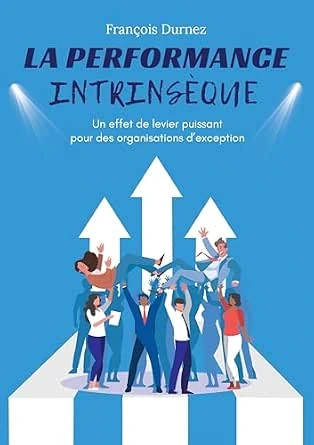
Lean, agile, KPIs, transformations: seventy percent of these initiatives fail or run out of steam. Remarkable organizations don't copy a recipe; they grow their own momentum. This book opens another path, intrinsic performance: a unique culture, well-tuned postures and tools the front line makes its own, with real cases and tools you can apply right away. (In French.)
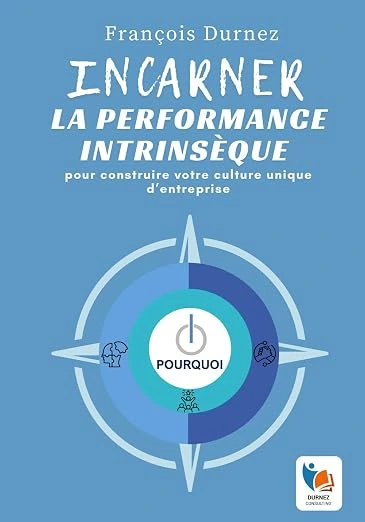
Like our brains, organizations often tap only ten to twenty percent of their culture. This guide invites you to build your own cultural compass: emotional and relational intelligence, profiles and team dynamics, Heart Head Hands leadership aligned with your values. The hands-on follow-up to La performance intrinsèque, with prompts for reflection and practical exercises. (In French.)