What we hear first

You lead an executive committee, or you manage managers. Your team works, and working on it does not feel like a priority.

Yet what plays out in your team shapes the organization it runs. The way it makes trade-offs, communicates and handles cross-functional issues is copied by your direct reports, all the way down to frontline teams. Realign your executive committee, and your whole organization transforms.

What others do, and why it fades

Leadership programs, team building and coaching work on the individual, or the team, over a few days scattered through the year. We call this the Red Bull effect. The moment feels good, the energy is there, then comes the landing. A few weeks later, everything has fallen flat and little or nothing lasts.

Organizational consulting, for its part, brings methods built elsewhere, Lean, agile, and now AI, that land on teams rather than being built with them. It is methodological interference, imposed from outside, and operational teams often answer: “we're not Toyota, Spotify or Big Tech.” Rejection follows, and studies confirm that three quarters of these initiatives fail.

The transformation paradox. When a consulting firm offers you a cultural transformation, it often sends two experts, one in performance methods and one in leadership. Those two people demonstrate that they have not managed to integrate two inseparable dimensions, which is exactly what they are asking your leaders and managers to do.

What we do

Owning performance, from the executive committee to every team, systemically

It works through a forty-five-minute weekly team ritual, where performance is shared and steered. An almost sacred ritual, in one client's words. It works for an executive committee as well as for a frontline team, and each team adapts it before passing it on itself.

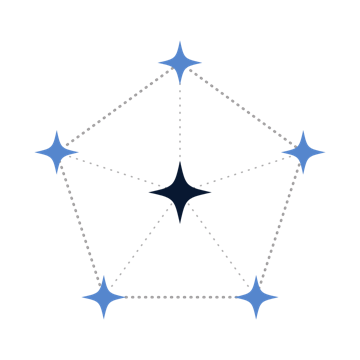
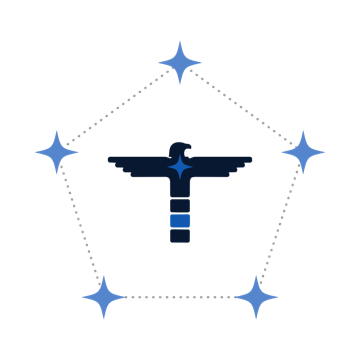
The five dimensions of the ritual are the five dimensions of team performance, and of organizational performance. That is what lets the approach scale while keeping the same language, and align the whole organization without anyone imposing it.

The team

Your Team TOTEM

Your executive committee works on its own dynamics and team performance, and not for its own sake. Better cooperation at the top changes everything that follows.

The organization

Your Tribe TOTEM

The ritual spreads from team to team. The five dimensions worked on in the ritual are the five dimensions of the organization's performance.

Both at once

Your TOTEM System

Both levels, team and organization, are worked on at the same time. The organization chooses the areas that matter most to it, and consistency holds because everyone works the same way.

What's inside

Five dimensions, fifteen tools

Each dimension relies on three tools, fifteen in all. The first in each dimension is the one an organization starts with.

The toolWhat it's for
Tribe · what teams really experience Connect · Leadership and management performanceLeadership has a live, up-to-date reading of team morale and workload, not a survey that is months old.
The health mapTrack each team's morale and workload every week, across the organization.
Heart Head HandsDevelop embodied leadership, through the three centers of leadership, in every team.
ValuesTurn the organization's values into behaviors observed in every team.
Orientations · a shared direction Guide · Strategy, from vision to executionManagers know the strategic priorities and can name them. Each team links its current priorities to the organization's.
The HeadingAlign vision with execution, from leadership down to the front line.
The scanRead the environment and its trends to inform the vision.
The SWOT-XDecide and arbitrate strategic priorities at every level, based on a shared assessment.
Tactics · cross-functional indicators Organize · Steering operational performanceA “service level” means the same thing across the whole company. Problems at the interfaces between teams are visible and dealt with.
The VOXListen to the four voices, customers, business, employees and partners, to adjust priorities.
The value chainSteer performance across departments, all the way to the customer.
SQCDVPCascade indicators to every level: safety, quality, cost, delivery, volume, people.
Evolution · shared improvement Improve · Continuous improvement: Lean, agile, AIFront-line problems rise to the right level and come back down solved. A problem solved in one team benefits the others.
ECARSolve problems methodically: stakes, findings, analysis, resolution.
IDEESurface and commit to ideas, from immersion to engagement.
Lessons learnedCapture and share good practices, from one team to all the others.
Mid-term · workload arbitrated Project forward · Programs, projects and portfoliosEach team steers its projects in its regular review. Leadership sees the real project workload before it becomes a problem.
Workload managementMeasure teams' real capacity against demand, before overload sets in.
The project portfolioSteer all of the organization's initiatives, programs and projects.
The project charterFrame each project and measure its iteration pace: deliver, show, adapt.

★ The tool an organization starts with, in each dimension.

No organization installs all of these tools, nor in this order, which is only a reference sequence. The assessment shows which ones to activate first, and the organization chooses the areas that matter most to it.
Every loss has a cause, and a cost

TOTEM tells you where a loss comes from: one of the five dimensions, one of the fifteen tools. COSTS tells you where it is paid for: customers and revenue, operating tools and equipment, spoiled units, staff time, surplus consumption. The approach ends with a decision: which area to invest in first, with which tool, for what gain.

The losses approach, further down this page →
What happens after we leave

Yes, we sell a method too. The difference lies in what happens when we are no longer there. Our methods arrive unfinished, teams finish them, and teams that already practice sponsor the ones getting started. What we look at is not the rollout rate but the ownership rate, and our job is done the day teams no longer need us.

Where to start

With the online assessment. Fifteen practices, two perspectives, the team's and the organization's, and a snapshot of your situation in fifteen minutes. It is the first step of the approach, and it is free.

Our approach

One approach for all three offerings, in five steps

It always starts with the assessment, and every step is scoped with you. The effort shown is for a full engagement.

Tap a step to expand it.

The business case · the losses approach

Every loss has a cause, and a cost.

TOTEM tells you where it comes from. COSTS tells you where it is paid for. We always act on the cause, never on the cost.

The losses approach ends with a decision: which TOTEM area the leadership team invests in first, with which tool, for what target gain.

Two complementary lenses

Waste is visible at the workstation: the seven Lean categories, everyday irritants. It opens people's eyes.

Losses are traced from their cause all the way to the P&L. They drive decisions.

The TOTEM of losses is the TOTEM of the ritual

A loss is filed where the team talks about it every week, in one of the five dimensions. And the tool that addresses it is already on the table: it is one of the fifteen.

The matrix

TOTEM → COSTS: where the loss comes from, and where it is paid for

On the left, the five TOTEM dimensions and their fifteen loss families. On the right, the five COSTS counters, with what is measured in each and the P&L line where it shows up.

Where the loss comes from · TOTEM
T

Tribe

Health and workload · Engagement and retention · Culture and behaviors

O

Orientations

Direction and customer focus · Reading the environment · Decisions and trade-offs

T

Tactics

Organization, roles and silos · Flow and quality · Resources and tools

E

Evolution

Problem solving · Ideas and innovation · Know-how and lessons learned

M

Mid-term

Workload and capacity · Project portfolio · Delivery and transformation

Where it is paid for · COSTS
C

Customers and revenue

Lost margin or revenue, penalties, cancellations.

In the P&L: revenue, margin, commissions, penalties.

O

Operating tools and equipment

Hours of downtime, capacity paid for and not delivered.

In the P&L: maintenance, IT, rent, depreciation.

S

Spoiled units: lost, reworked or tied up

Parts, files or seats lost or redone, tied-up inventory.

In the P&L: materials, scrap, rework, financing costs.

T

Staff time

Hours lost, valued at the hourly cost.

In the P&L: personnel costs, overtime, temp staff, supervision.

S

Surplus consumption and purchasing

Energy, licenses, services, recruitment, transport.

In the P&L: energy, purchasing, external services, recruitment costs.

1A main loss is a counted event, then euros.
2File it under the root cause, not the symptom.
3A loss is counted once, where its lever is; its consequences are costs, not further losses.
4The customer goes under Orientations; silos under Tactics.
5Evolution counts repetition and lack of follow-through, never the problem itself.
By industry

Where each industry pays for its losses

The same model yields different profiles. Here is each counter's share in eight industries.

Process industry
10 %30 %15 %25 %20 %
Manufacturing
16 %16 %23 %32 %13 %
Public services
16 %11 %12 %45 %17 %
Banking
25 %11 %11 %40 %12 %
Insurance
24 %10 %13 %39 %15 %
Tech startup
25 %20 %39 %12 %
Transportation
27 %24 %28 %18 %
Energy
21 %20 %31 %22 %
All eight industries
20 %16 %13 %35 %16 %
C · Customers and revenueO · Operating tools and equipmentS · Spoiled units: lost, reworked or tied upT · Staff timeS · Surplus consumption and purchasing

Staff time is the top counter in seven industries out of eight. In the process industry, it is operating tools and equipment, at 30%, whereas they weigh only a few percent in a startup. These are typical profiles, drawn from our loss reference base. Yours is quantified during the assessment.

The approach

Four steps, from a tour of TOTEM to a decision

1

The baseline

Walk through the five dimensions with the team and its manager: waste at the workstation, irritants, the ritual's dials. Nothing is quantified yet. Output: a raw list.

2

The main losses

For each item, ask “where does this come from?” until you reach the cause. File the main loss in the matrix and name the event being counted.

3

The tree and the euros

From each main loss to the COSTS leaves: hours × rate, stoppages × throughput, units × cost, customers × margin. Each leaf is quantified in euros per year.

4

The base, the potential, the decision

The base is the total of quantified losses; the potential, the share that can be recovered depending on the resources committed. The matrix reads by row (where losses arise, the area to activate) and by column (where they are paid for, the urgency).

The decision, in one sentence, at the executive committee

“We invest first in this area, which carries x% of the base: we activate this tool, with a target gain of €z k per year. The next area comes after that; the others wait for the next baseline.”

An area with no quantified loss is not a healthy area. It is an area nobody has investigated yet.

Across the firm's last eleven engagements, seven main losses sat in Tactics, three in Tribe, two in Mid-term and one in Orientations; staff time was affected ten times out of eleven. That is where TOTEM has already proven itself, and it is also a message: strategic causes often come in through the Tactics door.

Books

Three books carry the system.

Cover: Team TOTEM
The team · published

Team TOTEM

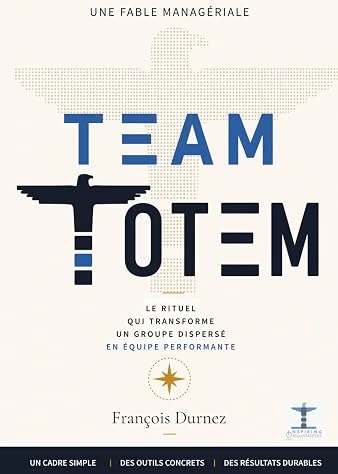
What if forty-five minutes a week could profoundly transform your team? Marc runs a three-thousand-person business unit: margins in the red, a leadership team that meets a lot and decides little, top talent walking out the door. One evening, he decides to change just one thing: his weekly meeting. A fable you devour, then a method you apply the very next week. (In French.)

Read more →
Tribu TOTEM
The organization · forthcoming

Tribu TOTEM

The ritual spreads from team to team, and the five dimensions worked on in the ritual become the five dimensions of organizational performance. How one team sponsors the next, and how the whole organization ends up speaking the same language.

TOTEM System
Both at once · forthcoming

TOTEM System

Team and organization worked on at the same time: the fifteen tools, the five dimensions, the assessment that shows where to start, and the consistency that holds because everyone works the same way.

Cover: Se libérer de l'entreprise libérée

Se libérer de l'entreprise libérée

January 2023 · 230 pages

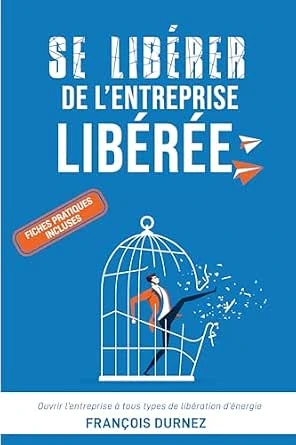
Team autonomy has been a holy grail for half a century, from quality circles to self-managed teams. Many companies turned to the "liberated company"; some succeeded, many turned back. Why so many failures? This book reconciles the need for freedom with the reality of organizations: the path of the aligned company, connected to the front line. (In French.)